Från frö till förfall
Martin Bergström & Cecilia Levy
Västerås konstmuseum
7 February to 20 September 2026
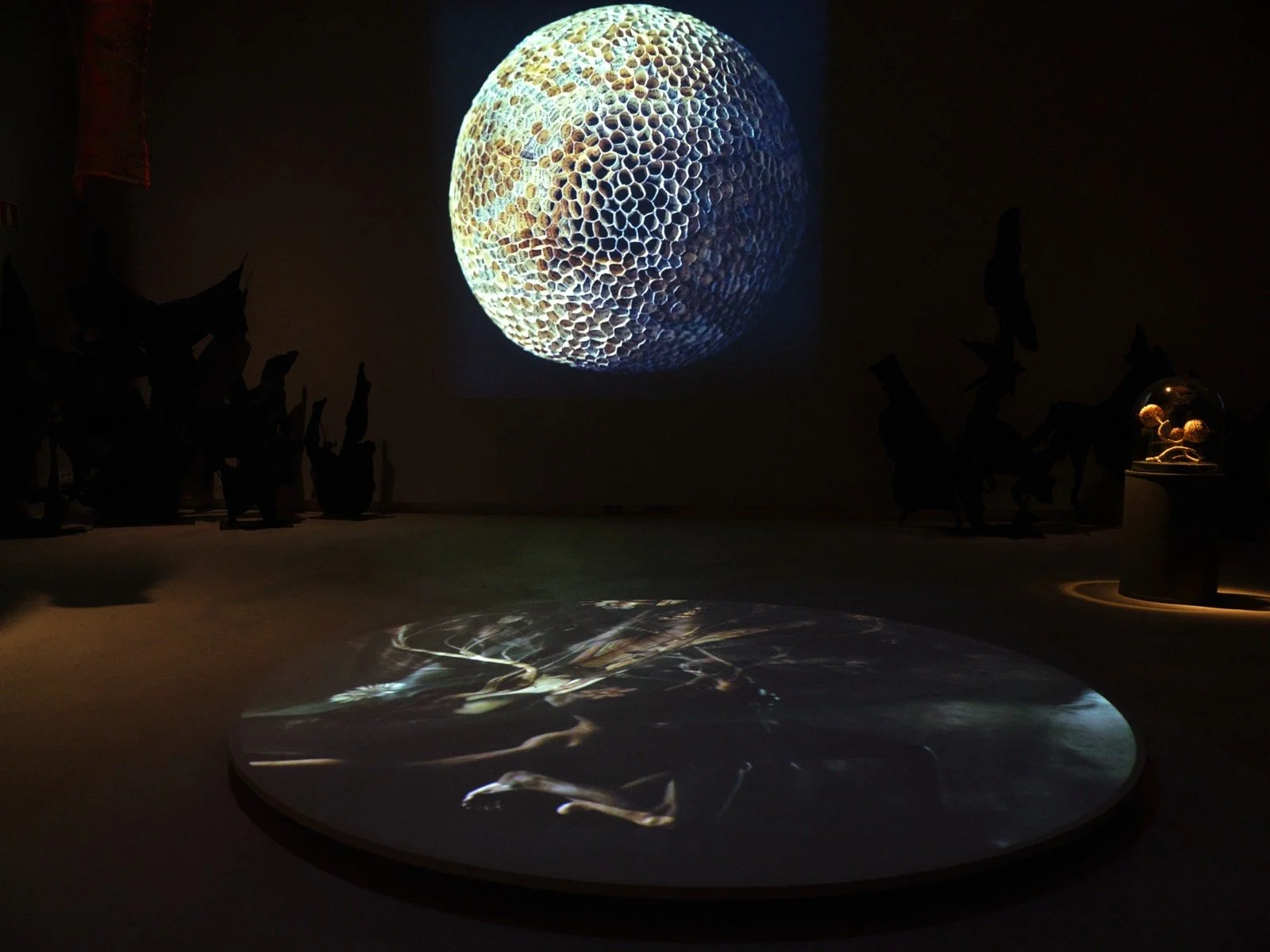
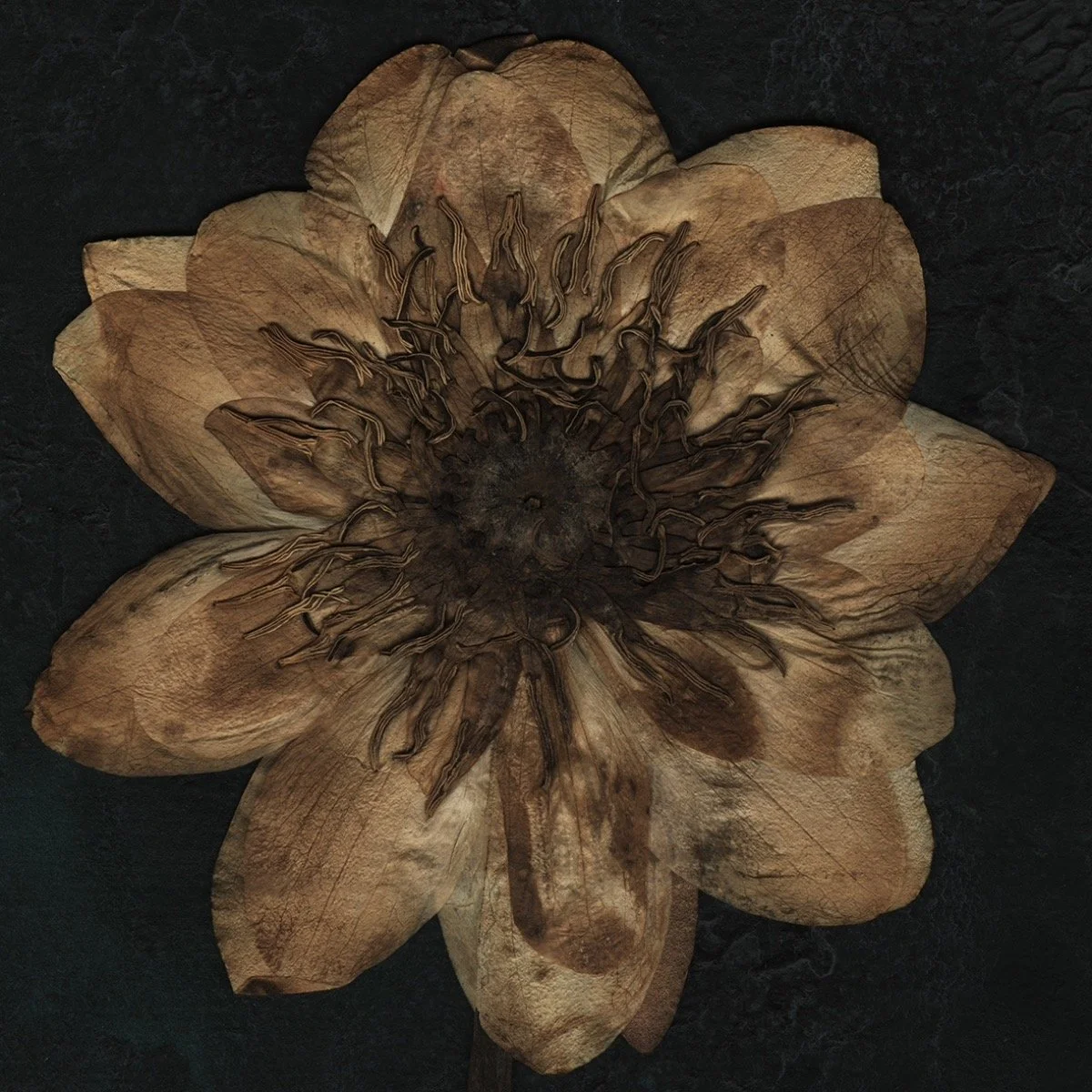
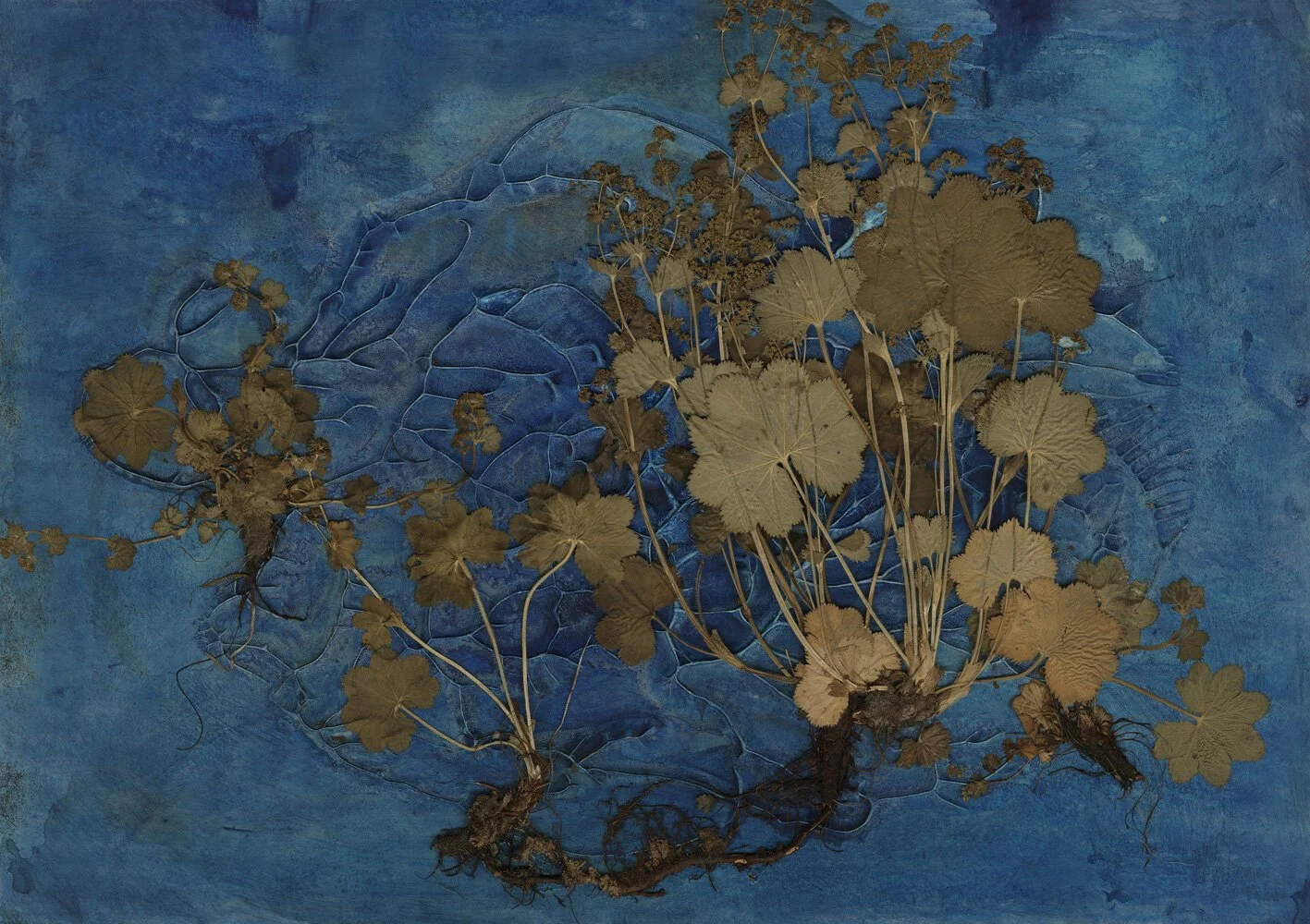
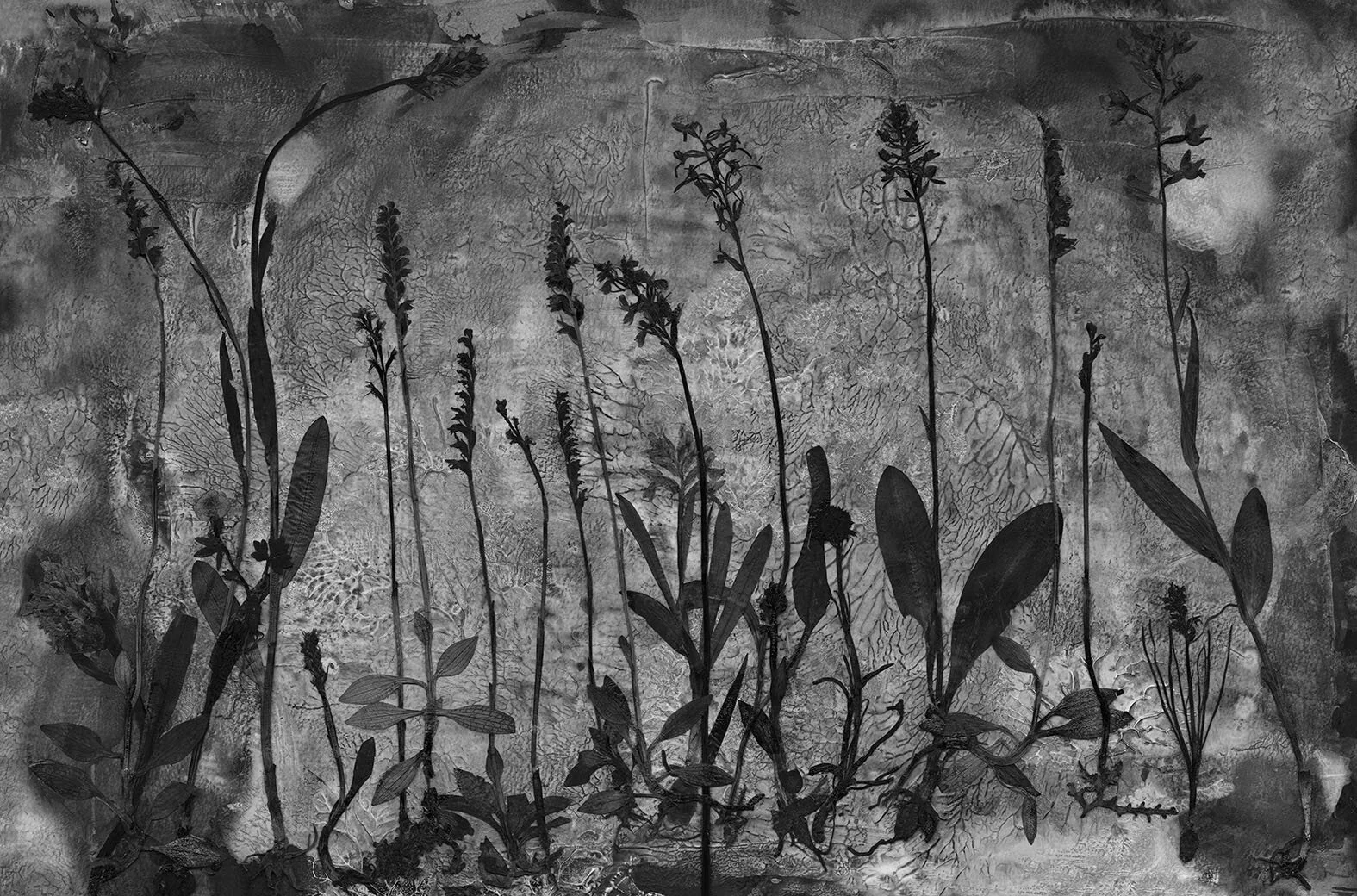
In the fragility of the moment just before something falls apart, that’s when time appears to change shape, turn to dust, morph into a memory, into onward movement. This exhibition takes as its starting point the cycles and permanent transformation of nature. It investigates the change from stability to disintegration, from manual to digital techniques, from darkness to light.
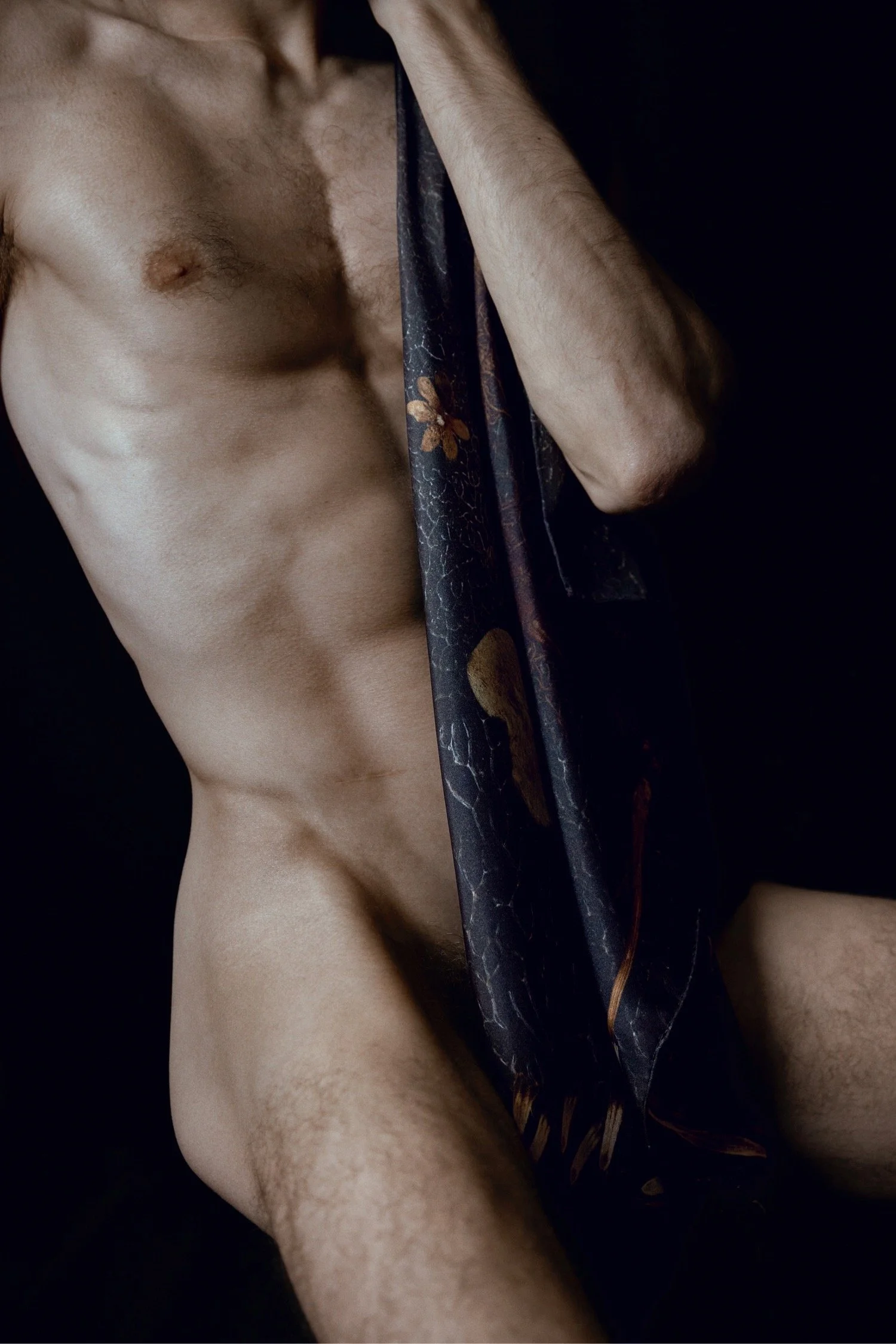
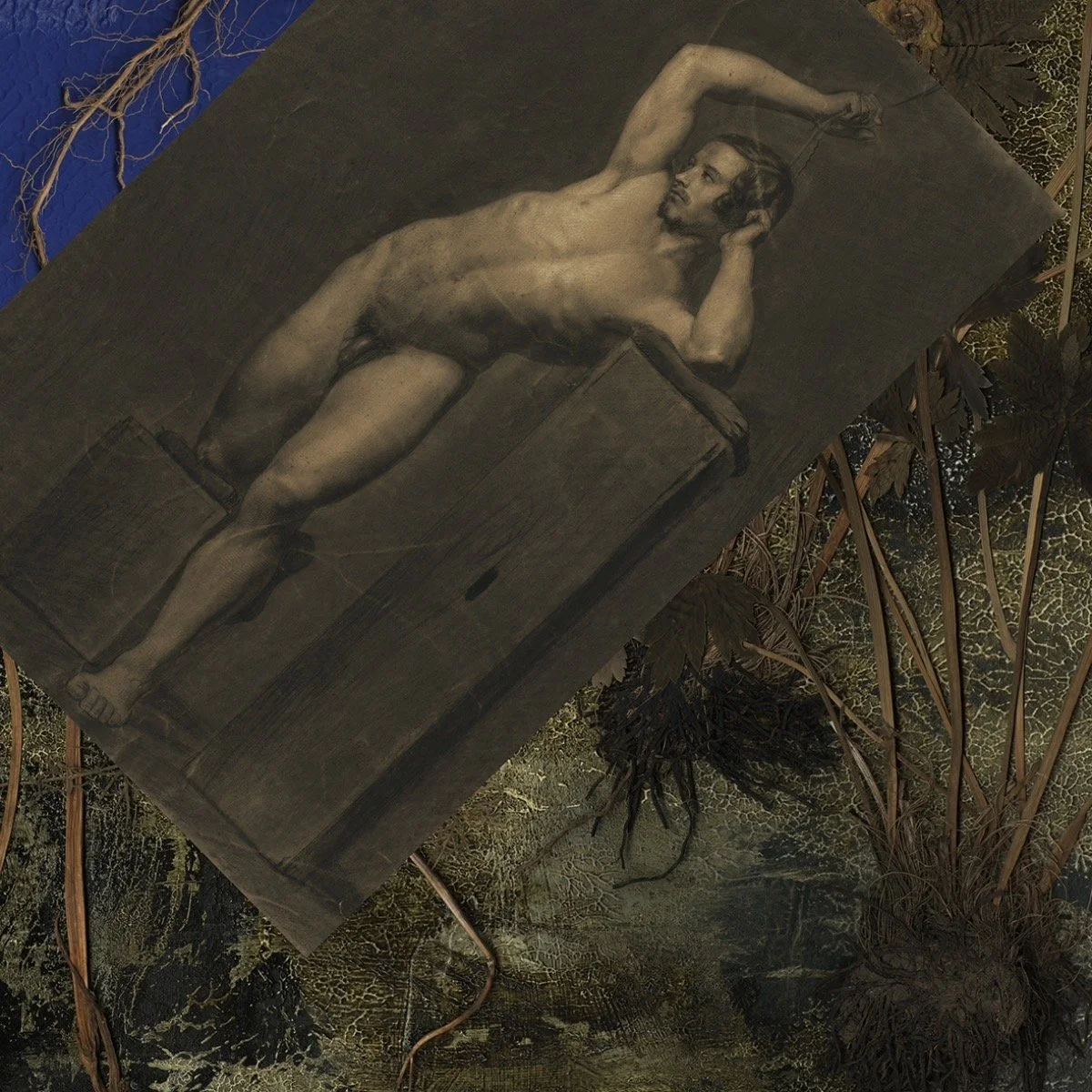
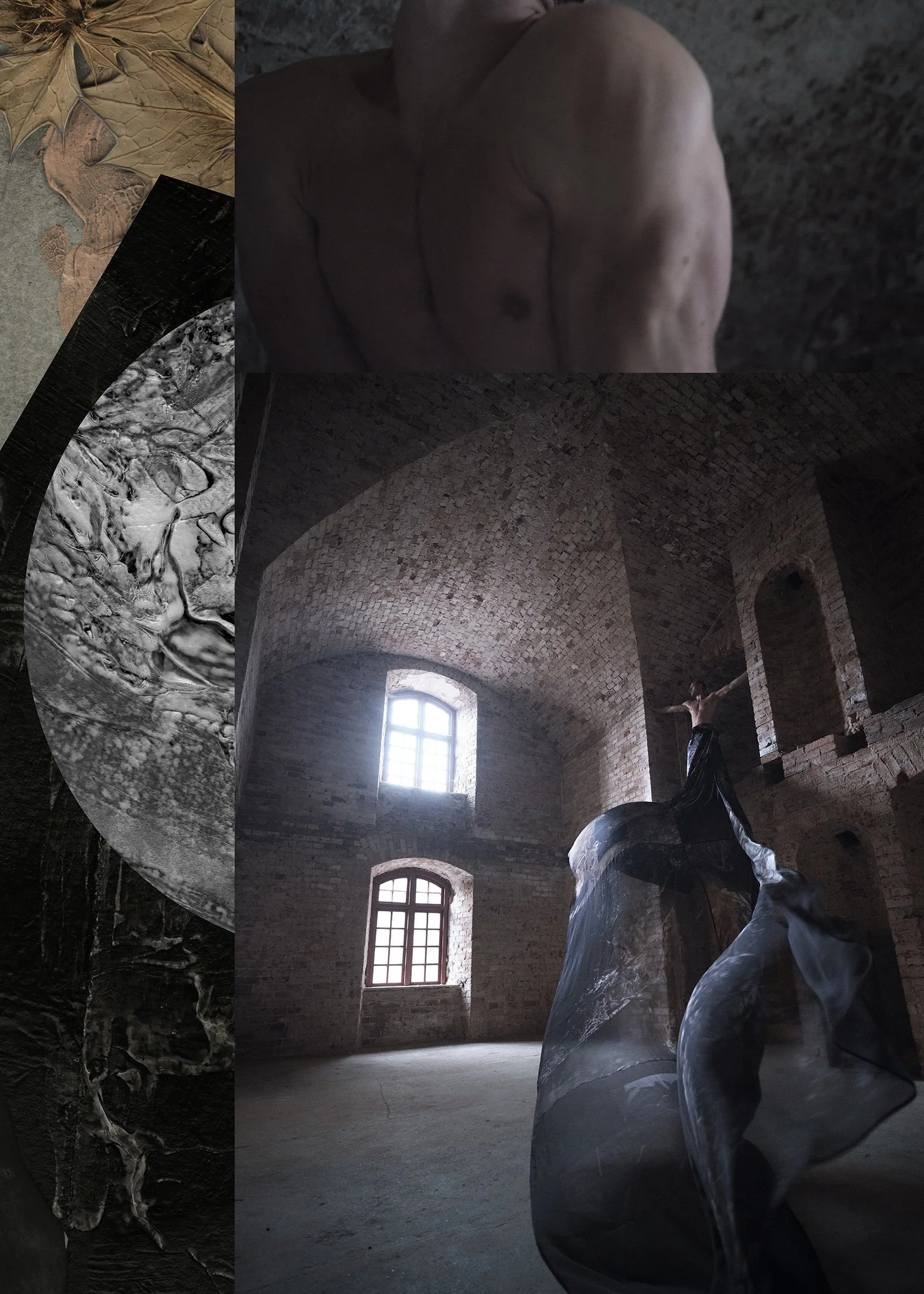
The beholder is invited into a spatial installation encompassing textiles, paper, and videos where each work bears traces of its own decomposition. Intricate jacquard fabrics with organic patterns are draped to produce a layer effect next to fragile plant objects made of paper. In the brightest of openings, what sprouts is decomposed; in the darkest of corners, something new germinates. And so everything begins anew. Nothing disappears; everything remains.
Cecilia Levy creates sculptural objects using paper. Originally trained as a graphic designer and book-binder, she now works full-time as an artist, using paper to create objects, sculptures, and installations. The paper, sourced mainly from old books, is a fragile and perishable material. She tears, cuts, or shreds the book pages and then puts them back together using wheatstarch glue and a type of papier-mâché technique. Her working process is slow and repetitive. What it yields are light objects, thin as eggshells. The book is recreated, but in a new form – the two-dimensional becomes three-dimensional. Any discolourations, traces left by readers, or signs of wear and tear on the old book pages are left untreated, which brings out their unrefinedness and imperfection. Beauty is in the patina of ageing.
When making new works for this exhibition, Levy’s thoughts centred on various oppositions and on the circular and cyclical: death and life, the endless loop. She delved into the soil, inspired by the world of microscopic organisms. We see an alternative nature sprouting, with hats, funnels, and other appendixes growing from sticks and twigs picked in the woods around her home. The book paper she uses was made from trees that once stood in different woods in a different era. Now those trees pass into yet another form.
In her art, Levy also emphasises issues concerning the value that we ascribe to nature. For example, her entirely white sculptures of Swedish province flowers are made from the same cotton pulp – a residual product of the textile industry – that is used to manufacture banknotes.
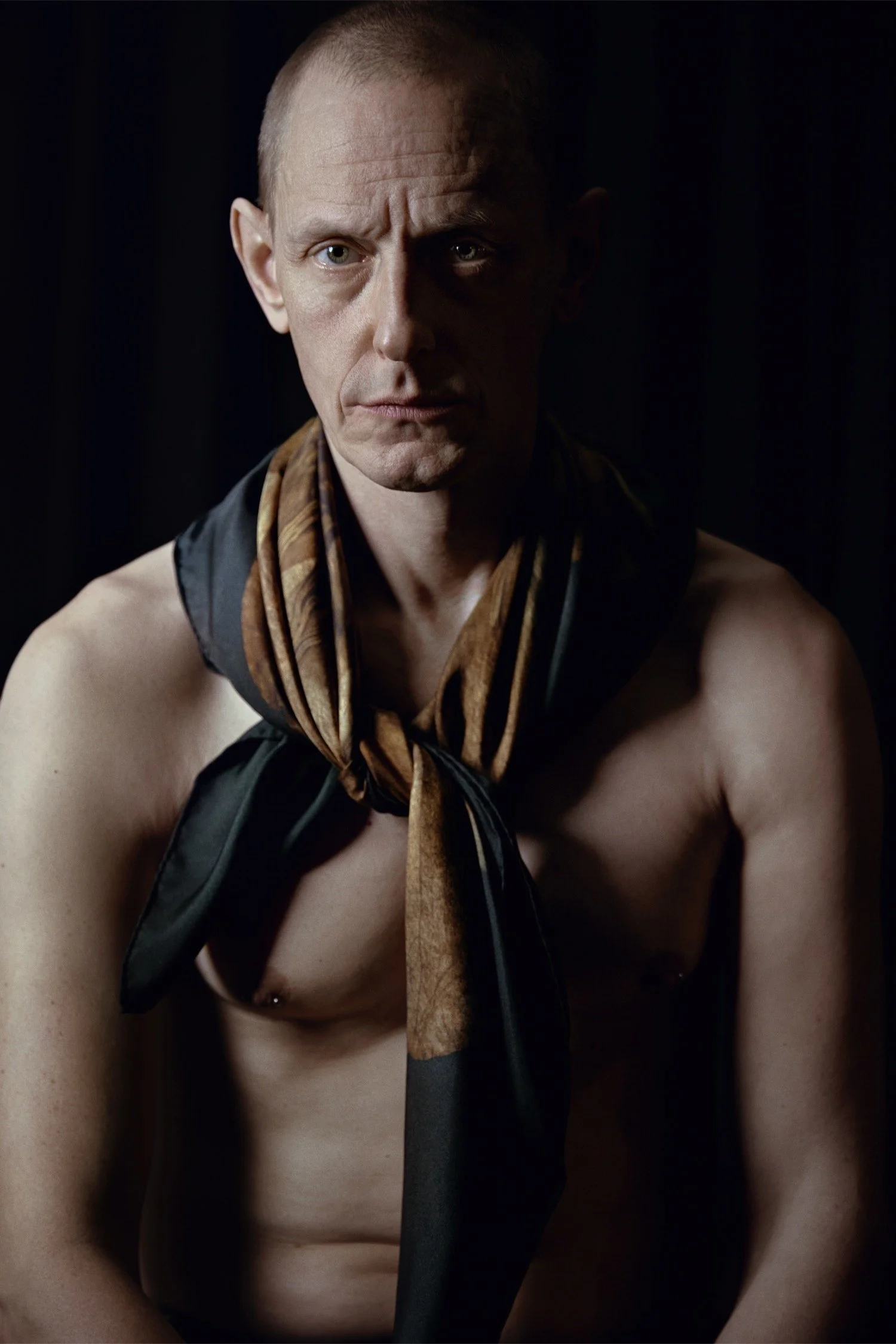
Martin Bergström engages in a cross-boundary practice spanning various materials and expressions – from fashion, scenography, and dance costumes to interior design, textiles, glass, and metal. His idiom is based on the deconstruction and abstraction of natural phenomena, yielding organic patterns and materials. There is often an underlying note of darkness, both metaphorically and literally. Bergström is fascinated by the perishable, by anything that is on the cusp of its own decomposition. Ever since his fashion collection and project entitled Strike a Pose and Decompose over twenty years ago, he has consistently applied the same cyclical principles: growth and decay, resurrection and decomposition. In this exhibition, he takes his work one step further, as in his digital jacquard fabric – a technique combining historical traditions of craftsmanship with contemporary digital innovation.
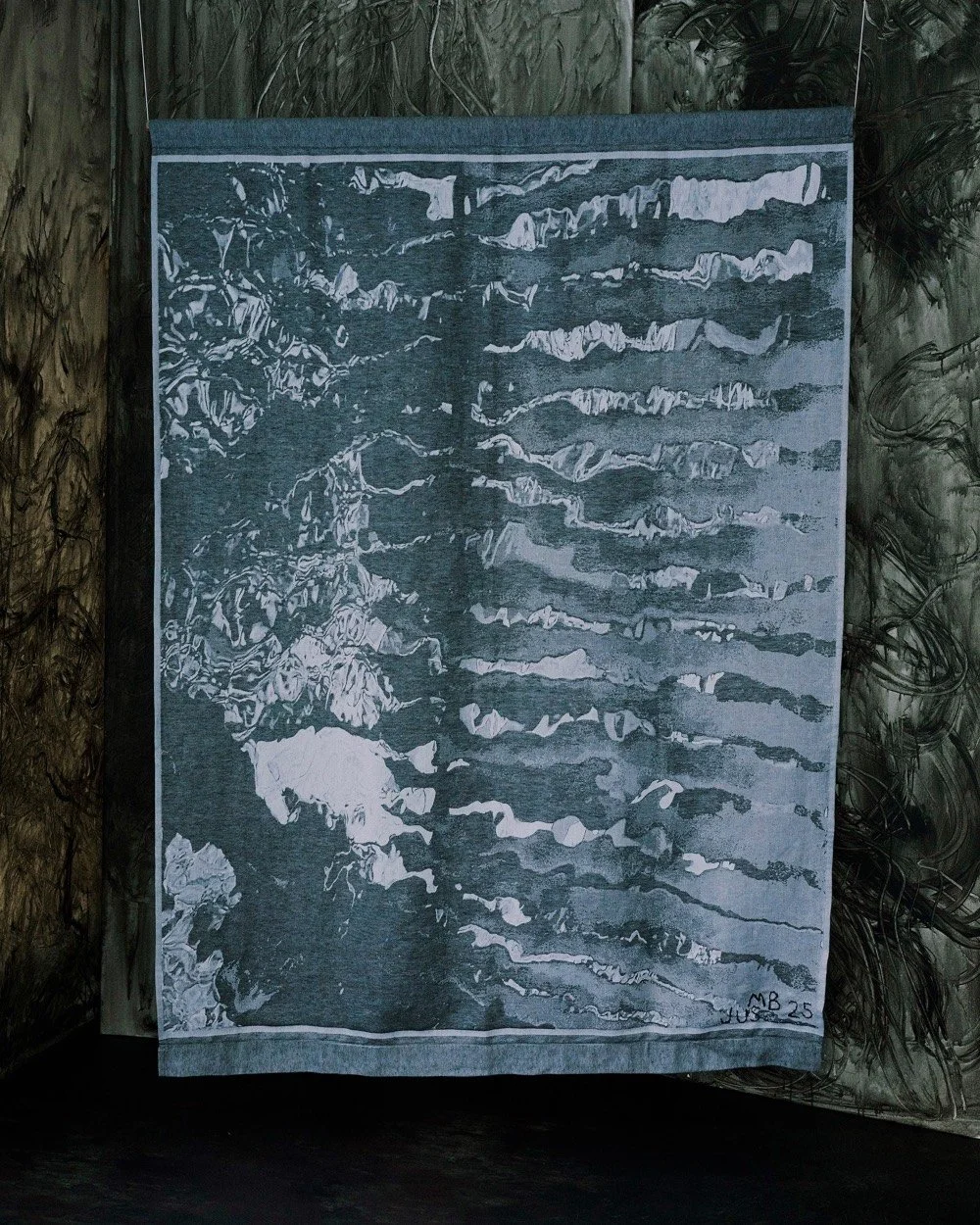
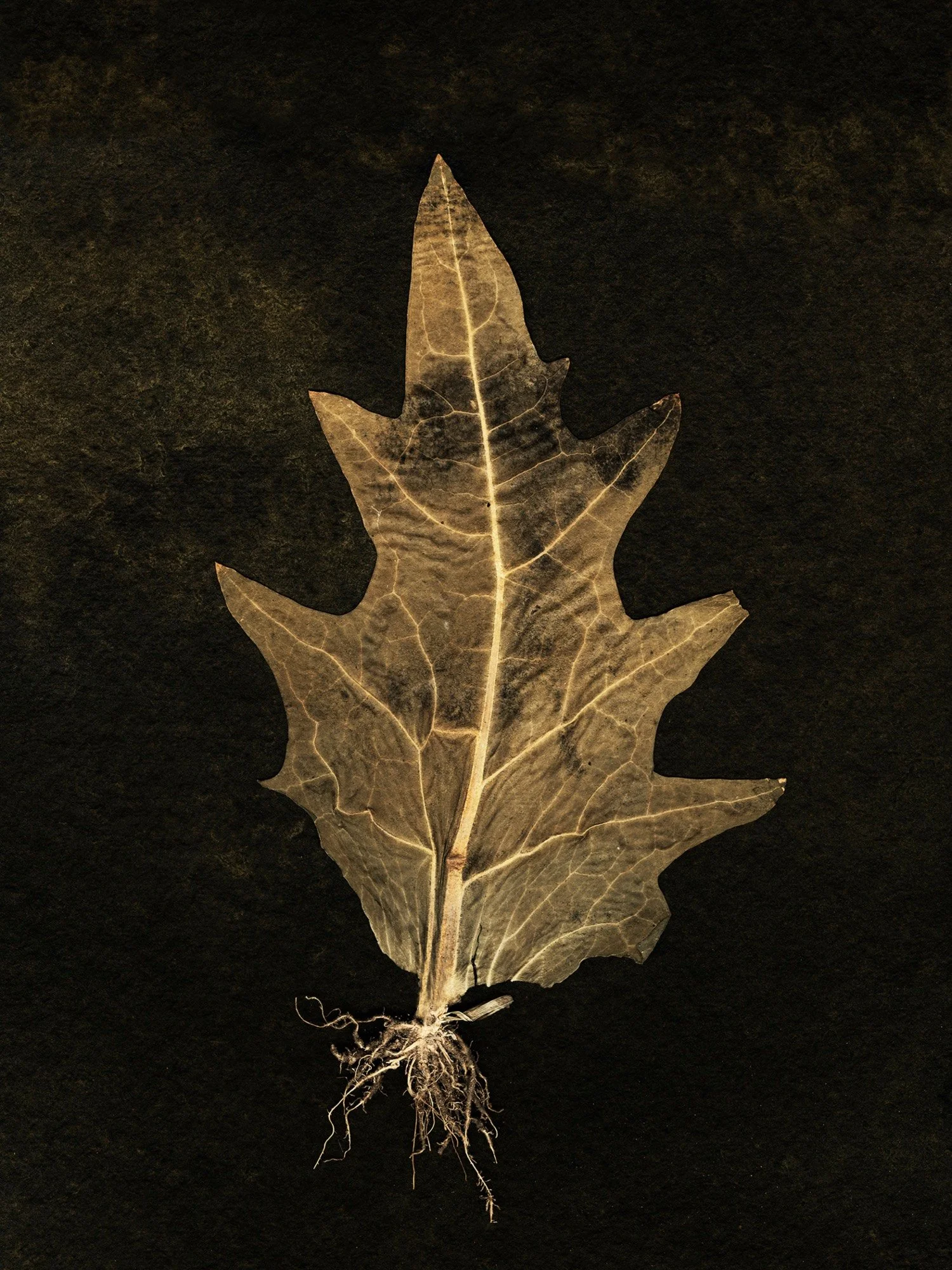
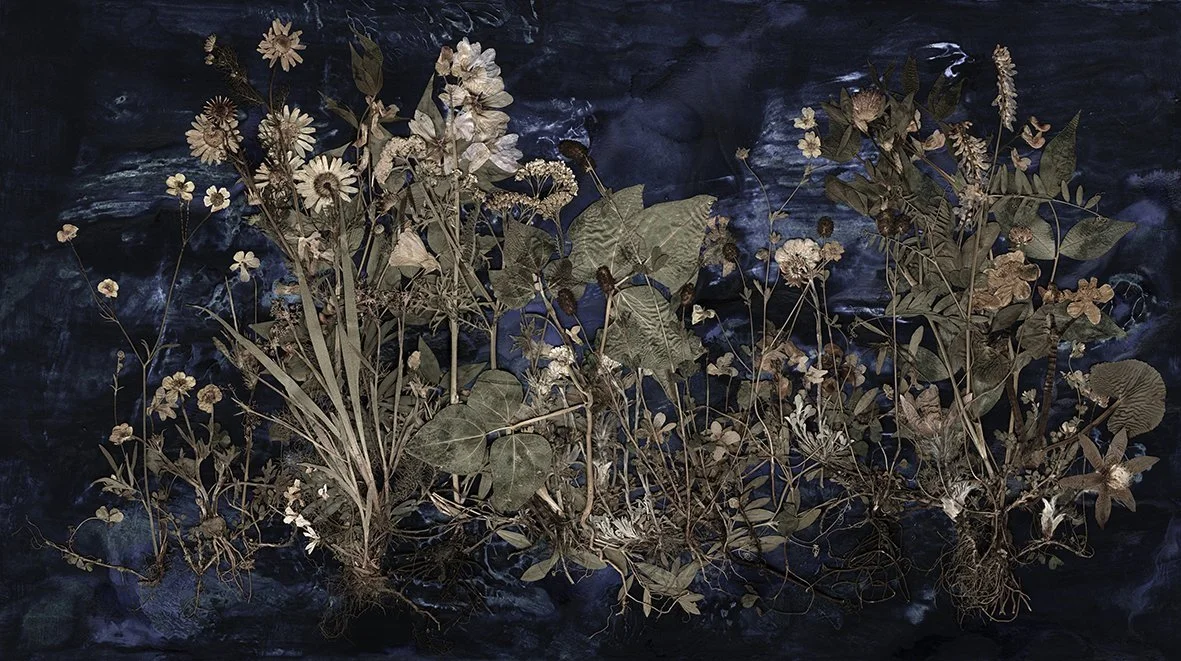
In the structure of the fabric, the passing of time becomes tangible: thread after thread meet, cross, and stretch until there emerges a pattern which does not exist in its complete form until the weaving of the fabric is finished. In his pattern worlds, Bergström goes back to herbarium plants from the late 19th century – flowers which were once picked and preserved on paper in a herbarium and which now, 150 years later, gain new life in a different material and a different temporal context. These works move between presence and absence, offering a poetic reflection on the ephemerality of life, on memory, and on what is sprouting still.
Curator: Martina Mac Queen
Producer: Andrea Hasselrot
Visual Concept: Martin Bergström
Animations: Anders Granström/ PXLFLD
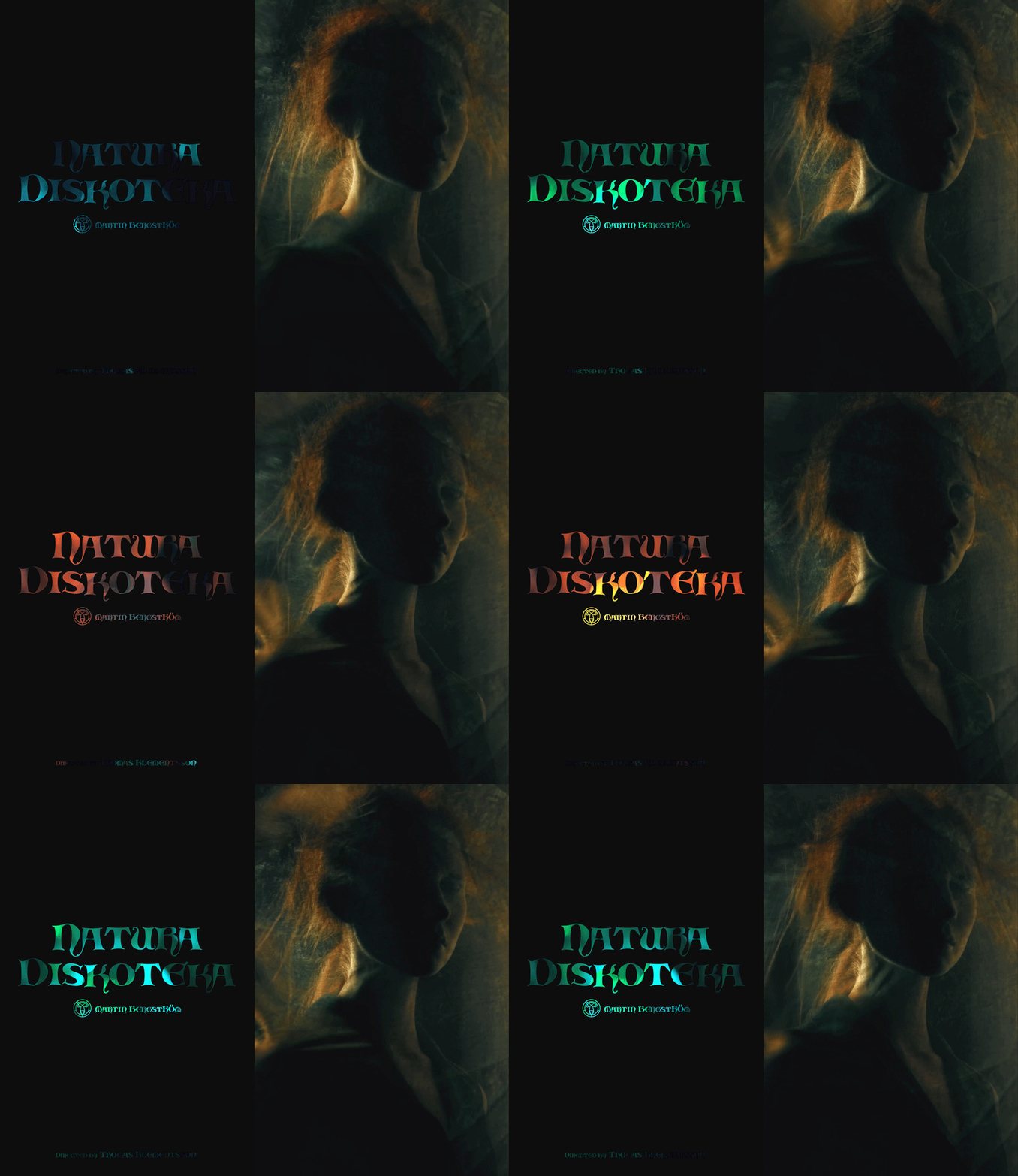
Breath, 2026
Director: Thomas Klementsson
Cinematography: Max Wångdahl
Producer: Andrea Hasselrot
Loop / Rot, 2025
Print design, jacquard-woven merino wool
Loop / Stack, 2025
Print design, jacquard-woven merino wool
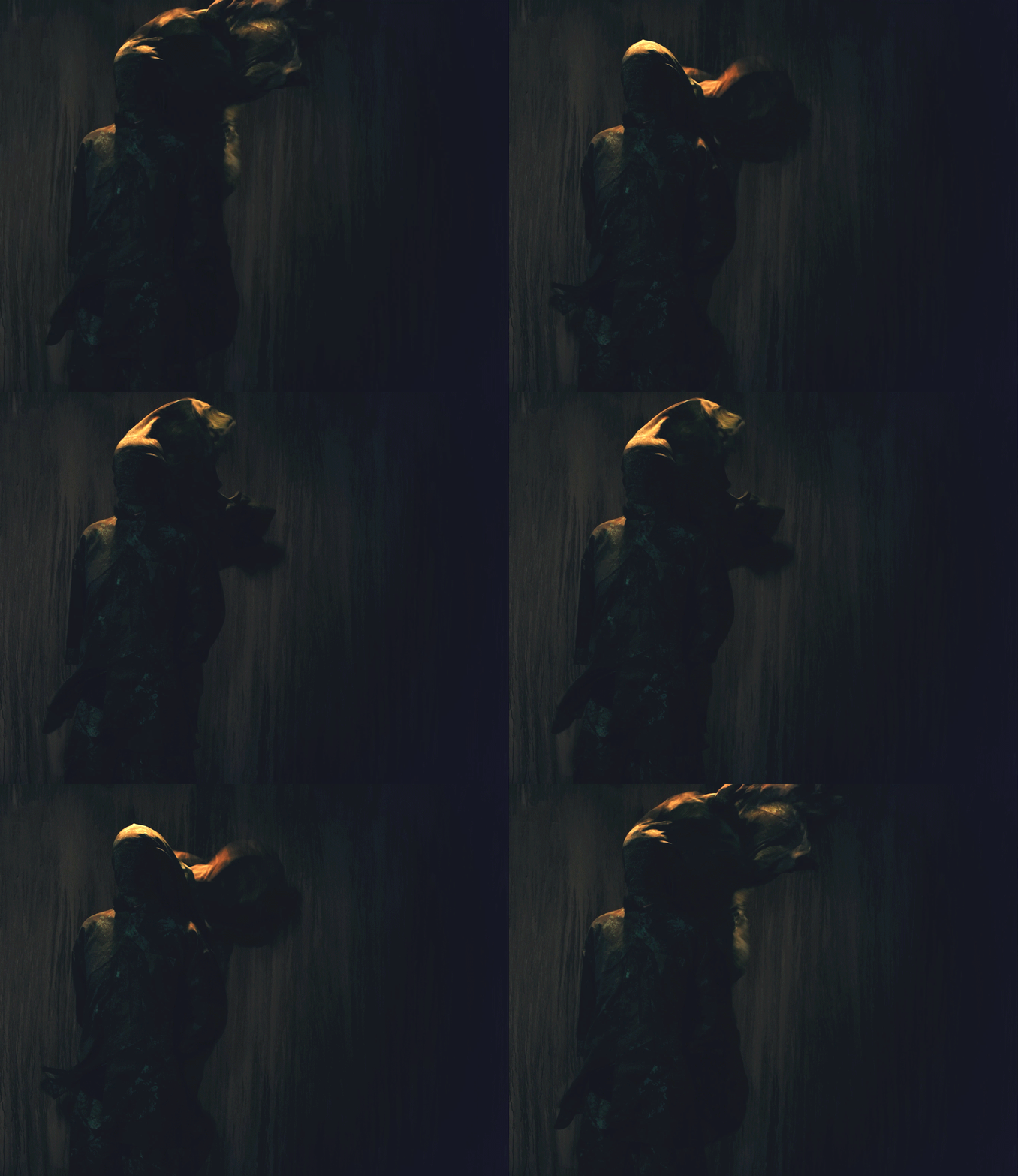
Loop, 2026
Director: Thomas Klementsson
Cinematography: Max Wångdahl
Producer: Andrea Hasselrot
Music / Bach - Violin Sonata No. 1 in G minor
Martin Bergström for Kalevala
The Itu collection, designed by Martin Bergström, is inspired by new life sprouting from a seed – by shoots that push up from the soft soil of the forest or through tiny cracks in city streets paved with asphalt.
The series includes a statement necklace and earrings, as well as smaller jewelry and charms that can be combined in countless ways. Personalize your jewelry by adding the charm of your choice – a seed, a pearl, or an engraving plate.
Photo: Mikael Niemi
Woven Linen
220x140 cm
Martin Bergström, 2025
Set Design for Carcy Magazine
Photographer: Julia Hetta
Stylist: Mattias Karlsson
Flower art
Photo: Robin Berglund
Model: Hedvig Palm
Styling: Laurent Dombrowicz
Make up: Ignacio Alonso
Hair: Karolina Liedberg
Floral art and Set design: Martin Bergström
Photo: Julia Hetta
Creative Direction and Styling: Emmantasy
Hair: Ali Pirzadeh
Make up: Igna
Models: Anna, Maja, Lekeliene
Producer: Studio Tellus
Set Design:Martin Bergström
Artwork for the exhibition Growth/Decay at Västerås konstmuseum 2026
Together
15 February – 24 August 2025
This year, the Thiel Gallery is celebrating its 100th anniversary. The centennial begins with Together, an exhibition to highlight the fact that the Thiel Gallery is the result of concerted efforts. This is true, of course, of its founders, Ernest and Signe Maria Thiel, who built one of Sweden’s most impressive art collections together, but also of the many artists they supported and whose works have shaped the Gallery. It also focuses on the venue itself; the Thiel Gallery immediately became a meeting place for the art scene of its day. Based on a few collaborations that exist in the building, the exhibition turns our attention to our own time, exploring how artists create together today, how artistic disciplines interact with each other and with other aspects of life.
The Fjæstads
The Together theme is present throughout the total work of art that is the Thiel Gallery. Many of the male artists that form the core of our art collection had life partners who were also artists, including Carl and Karin Larsson and Karl and Tekla Nordström. Another seminal couple were the first director of the Thiel Gallery, the author and art critic Tor Hedberg and the actor Stina Hedberg. The architect Ferdinand Boberg, who designed the building, was married to the artist Anna Boberg. This exhibition asks in what way these relationships have influenced the individual artists and the Gallery.
The Fjæstads ran their own company and had an unparallelled say on the Thiel Gallery interior. Gustaf and Maja, along with Gustaf’s siblings, are represented with several paintings, textiles and a suite of furniture. Their total design is a reminder of the interaction and collaboration of artists and art forms.
The word Together can also address how we organise ourselves. One group with a dominating presence in the Thiel Gallery collection is Konstnärsförbundet, a federation in which artists rallied around shared ideals. Here, we focus on their collective identity: how did they perceive and communicate their shared belonging?
Contemporary artists duos
100 years after the Thiel Gallery was founded, we note how similar collaborations are relevant to this day, even if the perspectives have shifted. Co-existing with nature has taken on new dimensions compared to when Ferdinand and Anna Boberg painted mountains and glaciers in northern Norway. What does it mean to create something together today? How does community influence artistic creativity? What does making site-specific works entail? How do we engage with the issue of working together, if we look beyond the interpersonal exchange?
To gain perspective on these questions, we have invited four contemporary artist duos: Bigert & Bergström, Linda Pedersen and Henning Hamilton, Bella Rune and Jonas Nobel, and Martin Bergström and Thomas Klementsson. These artists work (and some of them also live) together. They employ a wide range of styles and materials, in various forms of collaboration – with one another, with other people, and with their surroundings.
A richly illustrated catalogue in Swedish and English with an essay by art critic Bo Madestrand will accompany the exhibition.
Press pictures: Urban Jörén
Opaque Objects by Martin Bergström
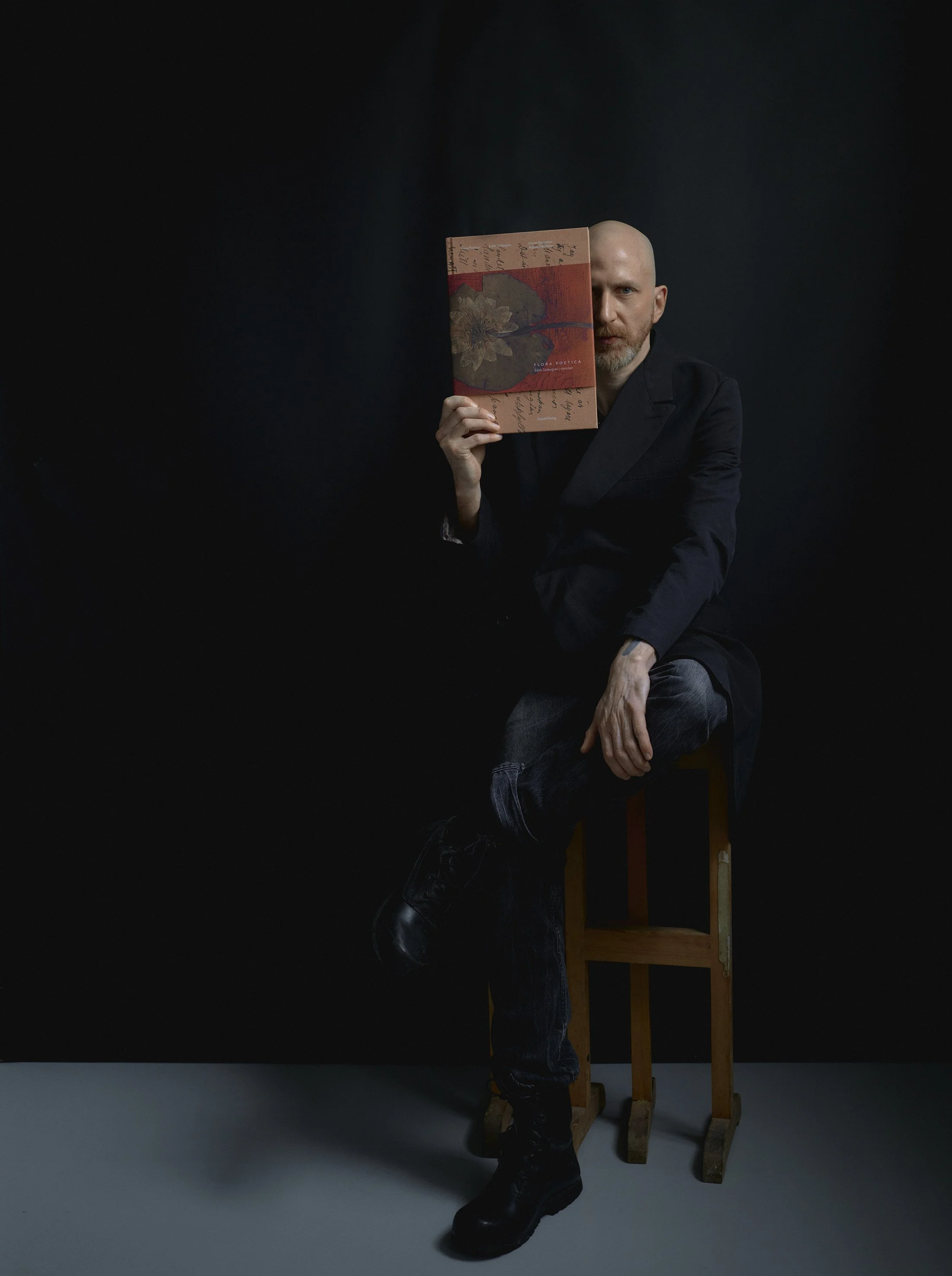
Flora Poetica – Edith Södergran i växtriket
Martin Bergström in dialogue with Edith Södergran.
Appell Förlag
Photo: Thomas Klementsson
The Bouquet Scarves
Helsinki Flowers
In the Weave of Creation
Four of Sweden’s most innovative designers – Bea Szenfeld, Frida Jonsvens, Martin Bergström, and Linnéa Samia Khalil – now present their work in the exhibition In the Weave of Creation at Norrviken.
In the historic Villa Abelin, a unique artistic composition has taken shape, where fashion, art and nature meet in sculptural expressions. The four works have been created exclusively for the exhibition, each carrying its own distinct language and narrative. What connects them is a shared attentiveness to the inherent power of materials – and an inspiration drawn from the forms, rhythms, and constant movement of nature.
There is a strong sense of process here – from the first sketch to the final silhouette. Reuse plays a central role for several of the designers, who breathe new life into existing textiles through experimental techniques, bold shapes and a deeply artistic drive.
The exhibition is on view in Villa Abelin / Norrviken Trädgårdar in Båstad until 2 November 2025
Foto: Atelje Lena
Dialogues Fashion Beyond the Wearable
In the exhibition Dialogues: Fashion Beyond the Wearable, four of the most renowned Swedish fashion designers of the 21st century engage in a dialogue with some of the classics of art history found in the collection of the Gothenburg Museum of Art. They present new works and installations with connections to artists such as Louise Nevelson, Berit Lindfeldt, Rodin, Henry Moore, and the 17th-century German artist Ottmar Elliger the Elder.
Sandra Backlund, Martin Bergström, Helena Hörstedt and Diana Orving have set the tone in Swedish fashion since the turn of the millennium. With fashion beyond the wearable, they engage in a dialogue with the collection of the Gothenburg Museum of Art. These four fashion designers’ work, methods, and questions have many similarities with contemporary artists, not only visually but also conceptually.
WREATH SCARVES
AVAILABLE AT JUS STOCKHOLM
Photo: Thomas Klementsson
The Bouquet Scarves
Helsinki Flowers
Photographer
Minttu
Featuring
Antti, Janne, Yonah, Bo, Saffet
Retouch
La Machine
Available at
Jus
Opaque Objects, Martin Bergstrom x Skultuna
Henbane Space Vase
The Bouquet Scarves
Helsinki Flowers
Photographer
Minttu
Featuring
Antti, Janne, Yonah, Bo, Saffet
Retouch
La Machine
Available at
Jus
The Bouquet Scarves
Helsinki Flowers
Photographer
Minttu
Featuring
Antti, Janne, Yonah, Bo, Saffet
Retouch
La Machine
Available at
Jus
The Gothenburg Museum of Art
Dialogues: Fashion Beyond the Wearable
12 May 2023–7 January 2024
Floor 6, room 29, floor 5, room 4 and 15 and the Sculpture Hall.
In the exhibition Dialogues: Fashion Beyond the Wearable, four of the most renowned Swedish fashion designers of the 21st century engage in a dialogue with some of the classics of art history found in the collection of the Gothenburg Museum of Art. They present new works and installations with connections to artists such as Louise Nevelson, Berit Lindfeldt, Rodin, Henry Moore, and the 17th-century German artist Ottmar Elliger the Elder.
Sandra Backlund, Martin Bergström, Helena Hörstedt and Diana Orving have set the tone in Swedish fashion since the turn of the millennium. With fashion beyond the wearable, they engage in a dialogue with the collection of the Gothenburg Museum of Art. These four fashion designers’ work, methods, and questions have many similarities with contemporary artists, not only visually but also conceptually. In the exhibition, they show new site-specific textile sculptures, installations, and moving images.
The relationship between the fashion world and art has been varied throughout history but is constantly recurring and more or less clear. During the 20th century, the boundaries between art and fashion were sometimes strict. Fashion has often been regarded as something superficial, as an artistic genre without depth where most of it has been about beautiful creations and attitude. Today, the difference between different artistic genres is no longer as sharp. Over time, the concepts have become more unruly. Both fashion and art expand, mutate, and merge into each other. Much of what happens in the borderland between them gives us keys to understanding what is going on around us. In fashion, just as in art, the prevailing zeitgeist and its ideals are reflected and thus give expression to the rhythm and taste of our time, what we call contemporary.
In recent years, the Gothenburg Museum of Art has consistently worked with the historical art’s relationship to the present and to raise awareness and problematize taste conventions and hierarchies in the art world. By allowing contemporary art and the collection to interact, new contexts and meanings are created that add new dimensions to both the exhibited works and the museum.
Catalogue
A catalogue is produced for the exhibition in collaboration with Skarp Projects and Studio Bon.
Producer: Andrea Hasselrot
Editor: Johan Lindberg
Preface: Patrik Steorn
Text: Daniel Björk
Design: Magnus Klahr
The project is a collaboration between the Gothenburg Museum of Art, Skarp Projects and producer/curator Andrea Hasselrot.
LITHAFLORA HYSTERICA
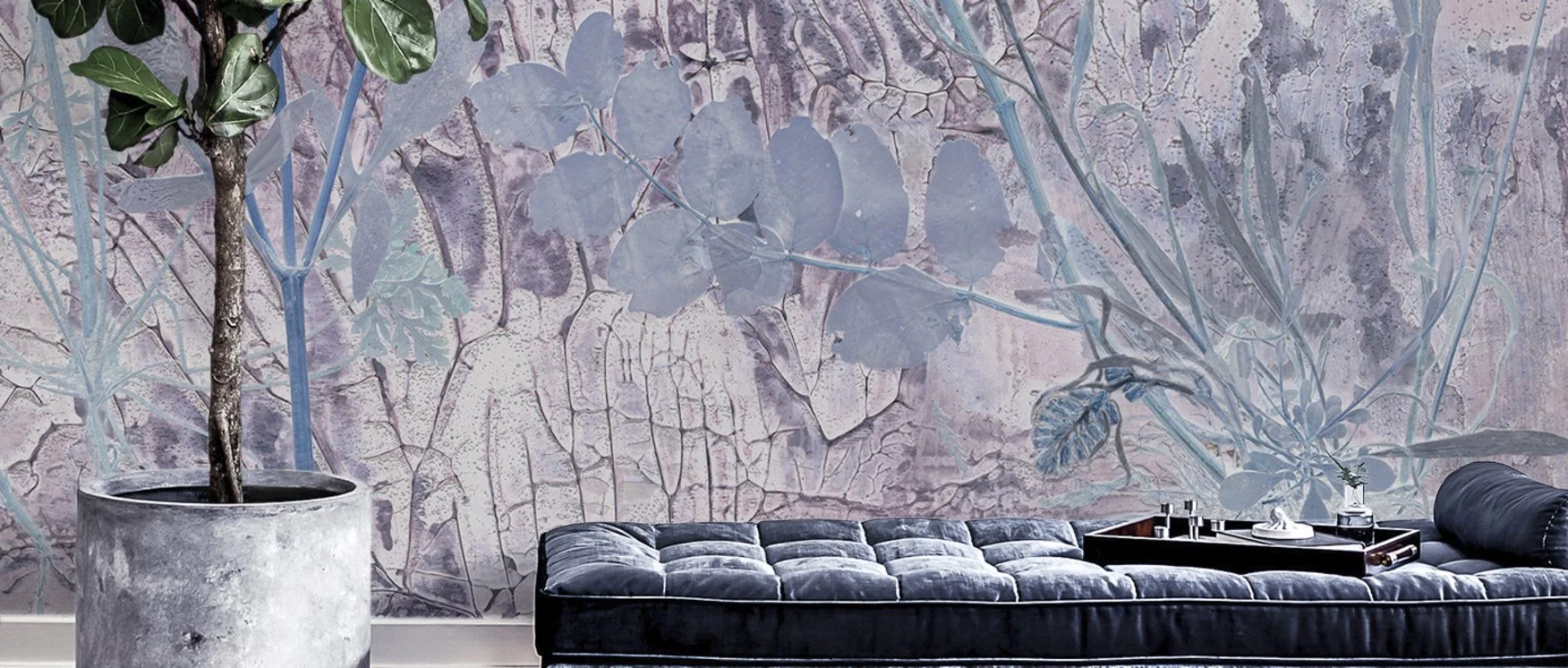
PHOTOWALL 2024
ANOTHER MAGAZINE
PHOTO: JULIA HETTA
STYLING: OLA EBITI
SET DESIGN: MARTIN BERGSTRÖM
The Bouquet Scarves
Helsinki Flowers
Photographer
Minttu
Featuring
Antti, Janne, Yonah, Bo, Saffet
Retouch
La Machine
Available at
Jus
Printed Positions The Textile Museum of Sweden
Since the turn of the millennium, pattern design has undergone a technical and aesthetic revolution, to a great extent spurred on by the development of digital technology. In Printed Positions, contemporary textile-pattern design is explored through works by 14 Nordic designers and artists.
Curated by Martin Bergström and Andrea Hasselrot, Printed Positions looks at how the field of textile patterns has been revolutionised from the ground up over the past 25 years, with changes to design methods, production techniques, and attitudes to patterns.
Patterns are present in nature, in our homes and on our bodies. They are ubiquitous in all kinds of design, not least in the textile field. But what constitutes a pattern today when digital technology has upended traditional ideas of repetition and printing techniques?
The exhibition takes us on a journey through the multidisciplinary patterns of today, where distinctions between interior design and fashion, ugliness and beauty, digital and analogue, and abstract and concrete are becoming increasingly blurred. This is an age that in one moment takes inspiration from nature and the next works with abstraction, moving between the future and the past, the playfully humorous and the graphically strict.
The participating exhibitors are:
Daniel Palillo
Edda Gimnes
Henrik Vibskov
Ingrid Berg
Klaus Haapaniemi
Liselotte Watkins
Lovisa Burfitt
Margrethe Odgaard
Martin Bergström
Patrik Söderstam
Reeta Ek
Thora Stefansdottir
Tronhjem Rømer
Tuuli-Tytti Koivula
Printed Positions/Mönstrade Positioner is curated by Martin Bergström and Andrea Hasselrot. Production by Andrea Hasselrot and Skarp Projects in collaboration with the Textile Museum of Sweden. In connection with the exhibition, Studio Bon designs a catalogue that presents all of the exhibitors, featuring in-depth discussions of the topic with contributions from professors, researchers, designers, and design critics from all of the Nordic countries.
The exhibition Printed Positions and its catalogue are produced by the Textile Museum of Sweden and Skarp Projects with support from the Swedish Arts Council, the Nordic Culture Fund, Kulturfonden för Sverige och Finland, Stiftelsen Clara Lachmanns Fond and the Letterstedtska föreningen
Set Design for Beauty Papers
Photographer: Julia Hetta
The Bouquet Scarves
Helsinki Flowers
Photographer
Minttu
Featuring
Antti, Janne, Yonah, Bo, Saffet
Retouch
La Machine
Available at
Jus
LAAVA GLASS COLLECTION
AVAILABLE AT JUS STOCKHOLM
The Sailing Stones- Tile Collection
Into the the dawn of history and the mystery of prehistoric times.
The Sailing Stones Collection links remote and ancients Pattern and Tile traditions with the vision of a poetic future and the traces we leave behind.
The Collection is full of options and possiblities and comes in a variety of different colour combinations inspired by the history of Tiles and the ingredients that forms them.
The Collection is produced using traditional pressed Tile teqniques and in a sustainable way.
-Im in love with the phenomenon of wandering stones. The way stones move in desserts
Slowly and mysterious.
The shape of the tracks.
I wanted to incorperate the mystery of the phenomenon and the ancient tradition of Tile making.
I want the Tiles to be loved and treasured.
For now and for the traces we leave behind us. To be found.
Photo: Thomas Klementsson
Martin Bergström, teamed up with ÄNG Studios to create the rug Biota. The carpet is inspired by mountains eroded over eons and the fragile, tiny place on Earth that we call home. From 2016, this collaboration progressed through concept, sketch and sample stages, with the hand-knotted rug Biota gradually emerging in 2023.
Photographer: Peter Gerkhe
Model: Eliott Marmouset
Tailor: Ulrika Svalling
Producer: Andrea Hasselrot
Design for the Award Statuette for the Great Communication Prize , Kommunikationspriset.
2023
The Sea Between
Closed borders and separated against our will.
Janne Marja-aho in Helsinki
Martin Bergström in Stockholm
A project made together, despite our separation.
Documented by Heidi Strengell in the archipelago of Helsinki.
Summer 2020
Supported by the Swedish Cultural Foundation in Finland.
Havet mellan oss
Dyker i djupet där våren vaknat
Du kan bära längtan för mig
Havet
Du kan bära sorgen för mig
Havet
Ta min kärlek till han som väntar på stranden, där häggen blommar
Havet mellan oss
The Royal Swedish Opera
Choreographer Hlin Hjálmarsdóttir
Scenography and Costumes: Martin Bergström
Light Design: Linus Fellbom
The Bouquet Scarves
Helsinki Flowers
Photographer
Minttu
Featuring
Antti, Janne, Yonah, Bo, Saffet
Retouch
La Machine
Available at
Jus
Opaque Objects by Martin Bergström
Photo: Julia Hetta
Martin Bergström for Photowall
The Royal Swedish Opera
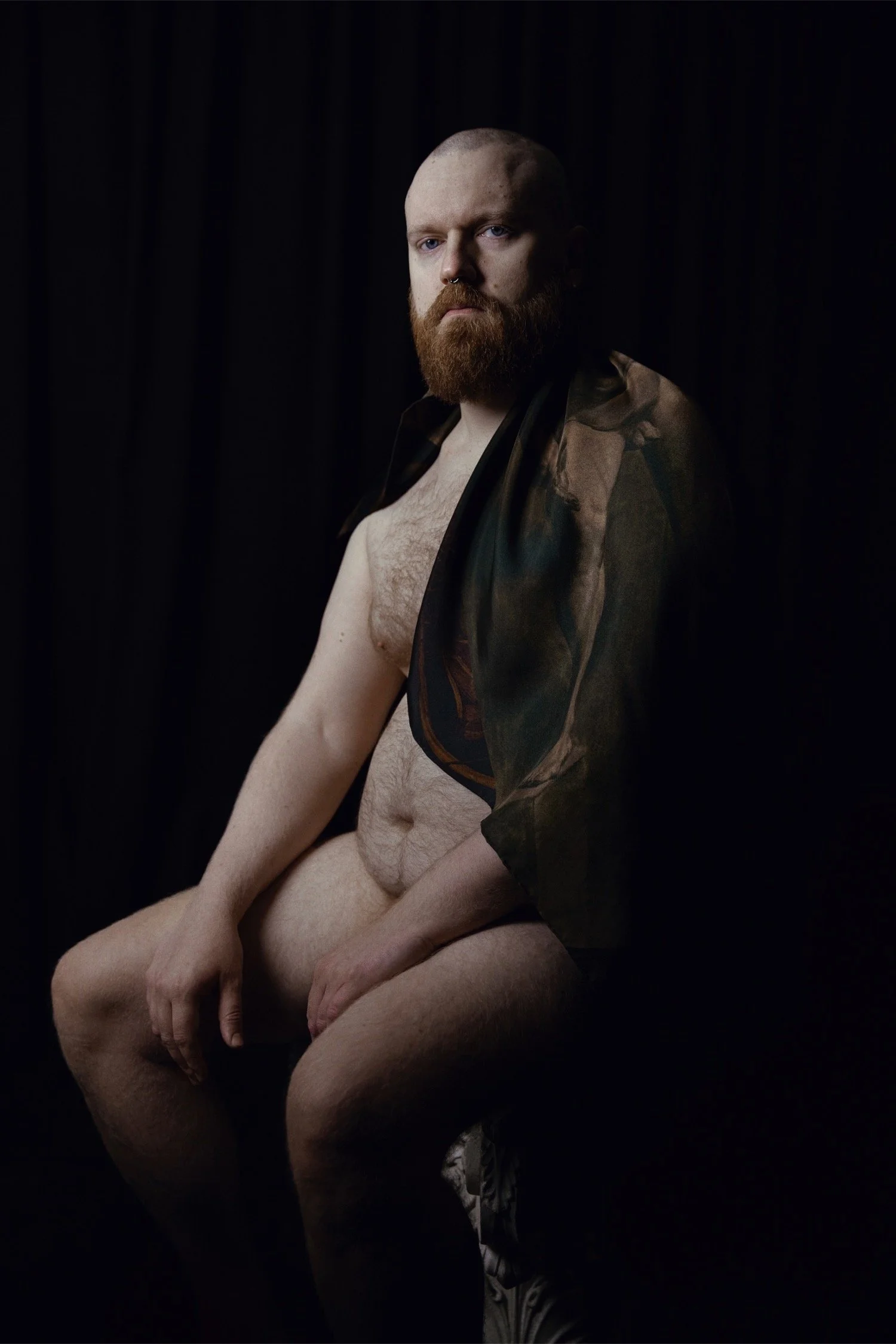
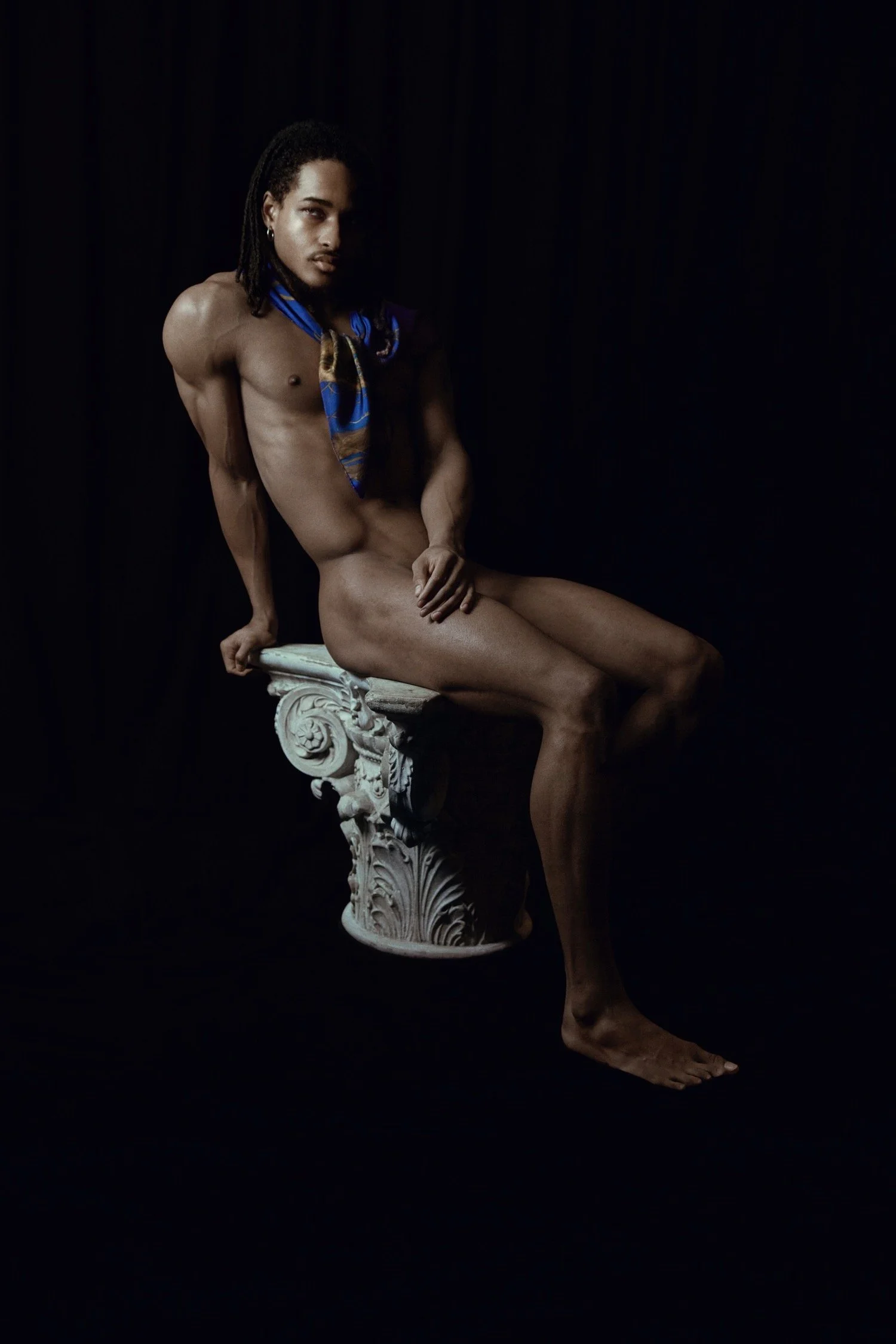
Martin Bergström launches his first Scarves Collection
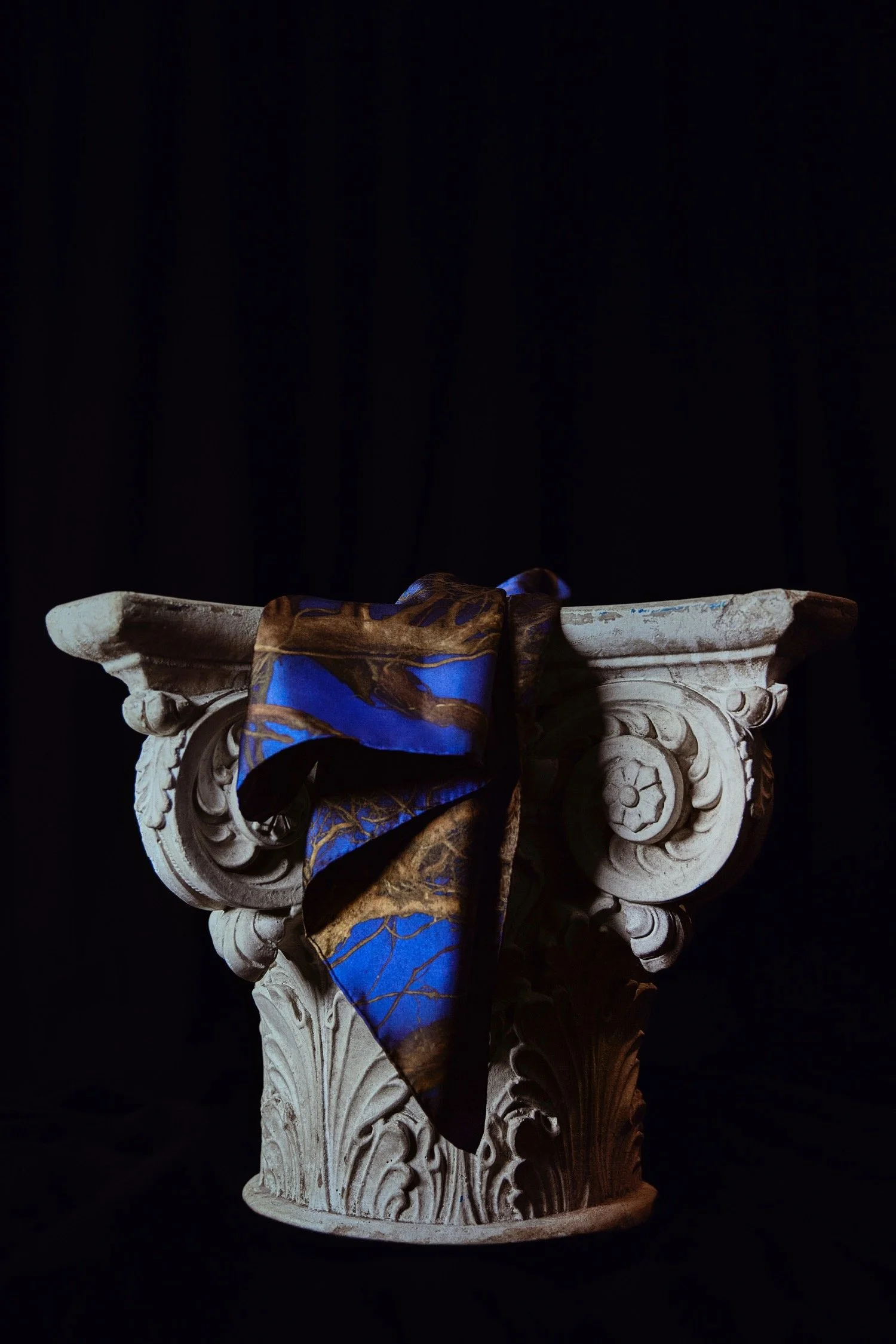
The mysterious and wonderful world of artist Martin Bergström is now materializing in an exclusive collection of scarves. The collection includes 20 different prints, and each motif is made only in a limited edition of 5. Among the motifs are some of the classic Martin Bergström prints as well as new visions; like the projecting of patterns upon old postcards. As always in Martin Bergstrom’s art, the design is built upon layering different techniques, of letting the analogue interact with the digital.
The scarves are made in silk twill with a French hem, and their size is 130X130. They are produced in Northern Italy. Each scarf is a piece of art that can be worn in different modes, or framed and put on the wall.
The collection will be sold at Jus in Stockholm.
Martin Bergström for Photowall
Art of Martin Bergström
by Martin Bergström